
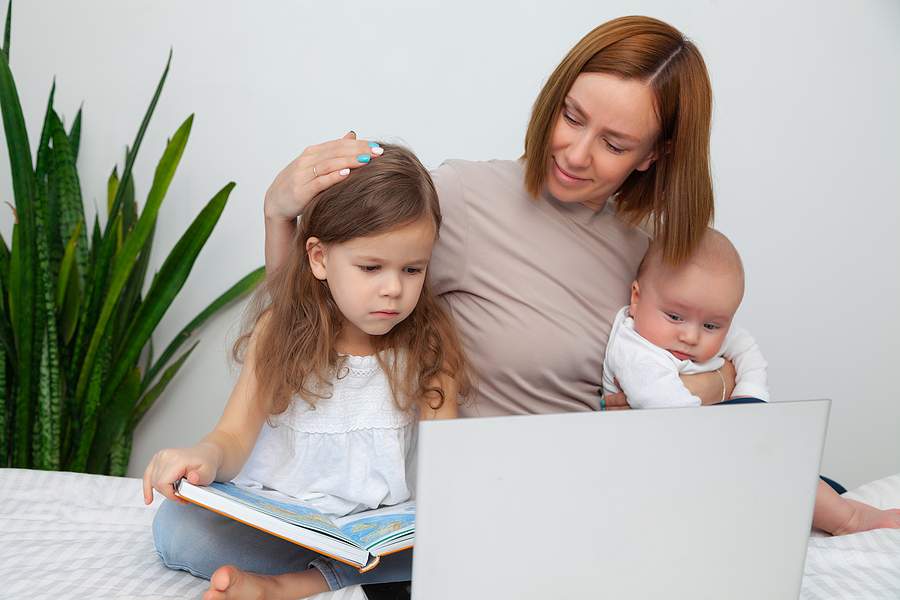
Homeschooling Older Children With a Baby or Toddler at Home
Share
When you are homeschooling an older child with a baby or toddler at home, the plan needs to account for both teaching and care. Begin by identifying which lessons need your direct attention and how you will respond when the younger child needs you.
You do not have to make every moment run smoothly. You do need a realistic way to provide instruction, supervise your children and return to work that has been interrupted.
Identify the teaching that needs you
Look at the next lessons before deciding when to teach them. Introducing a math concept, listening to a beginning reader or discussing a difficult passage may need your focused attention.
Separate those tasks from familiar practice your student can actually manage independently. An older child may work alone on one assignment and need substantial help with another.
Do not assume that a course described as independent removes the need for teaching, questions or review.
Work with the day you actually have
Notice when you are usually able to give a lesson attention, while allowing for changes in the younger child's needs. A nap may provide an opportunity, but it is not a guaranteed teaching block.
Prepare a small amount of work you can begin when an opportunity opens. Keep needed books and materials where you can find them.
If the day repeatedly leaves essential instruction unfinished, reconsider the arrangement. Changing the plan or arranging help may be more useful than trying to become better organized.
Plan for a pause and a return
Before a lesson, explain what your older child can do if you need to stop. They might mark the place, note a question or continue a familiar task that does not require your immediate help.
When you return, check understanding rather than assuming the work continued successfully. If something was confusing, begin there.
A simple note can help you remember what needs attention. Our homeschool planner guide offers one way to keep track of unfinished work without rebuilding the whole day.
Include little ones when it fits
A toddler may enjoy a suitable book or activity nearby during part of a lesson. Choose materials appropriate to that child and provide the supervision they need.
The activity does not have to resemble the older child's schoolwork. It is also fine to stop or change it when it no longer fits the situation.
An activity bin, video or shared learning area does not take the place of adult care.
Ask for a specific kind of help
If another adult is available, discuss a clear task and time: caring for the younger child during a lesson, teaching a particular subject or helping with an outside class.
Confirm the arrangement rather than assuming help will be available. Older siblings can enjoy time together, but their schoolwork should not depend on taking responsibility for a baby or toddler.
Our homeschool support guide distinguishes practical help, instruction and educational guidance.
For a plan involving several school-age students, see our guide to teaching multiple ages. It focuses on shared topics and individual lessons.
SCAIHS offers educational counseling and encouragement while parents direct their children's education. If you have questions about your educational plan, contact SCAIHS to arrange a conversation.


